
One Health Publications
Sustainability | Free Full-Text | The “Noble Method®”: A One Health Approach for a Sustainable Improvement in Dairy Farming (mdpi.com)
October 25, 2023
“… In this review, the most recent studies on Noble Method® are depicted, showing that, besides the nutritional proprieties of dairy products, the method is able to improve animal welfare, human health and environmental sustainability, thus falling within a “One Health” approach. …”
View Publication

One health approach to toxocariasis in quilombola communities of southern Brazil | Parasites & Vectors | Full Text (biomedcentral.com)
October 23, 2023
Conclusions
The high seroprevalence observed in quilombola communities of southern Brazil suggested high exposure to toxocariasis. The high vulnerability and close human-soil contact observed here as risk factors demand a One Health approach for detection, monitoring, and prevention of Toxocara spp. infection in both human and dog populations. Furthermore, educational improvement is necessary to prevent toxocariasis and other zoonotic infections.
View PublicationBhutan: How a Poor Land-locked Country Is a Model for the Rich and Powerful – Impakter
October 23, 2023
The first carbon-negative country in the world sets an example for the developed world, with a better, more sustainable pathway for the future
By **Richard Seifman, JD, MBA, Dipl. Dipl. AVOHS (Hon.) – October 23, 2023 in Society
“… Despite such “lapses” of modern measures of national drive and strength, Bhutan has found a different kind of life vision. It has famously created the notion of the Gross National Happiness index and is the first country to achieve carbon-neutral status. It is actively pursuing a One Health approach to better protect its people, animals, plants, and the environment. …”
“… It has also shown concern regarding the interface between humans, animals, plants, and the environment and issued the 2017 Memorandum of Understanding (MoU) establishing its One Health Strategic Plan to prevent emerging or reemerging infectious diseases. …”
**Member One Health Initiative Autonomous pro bono Team: Laura H. Kahn, MD, MPH, MPP ▪ Bruce Kaplan, DVM ▪ Thomas P. Monath, MD ▪ *Lisa A. Conti, DVM, MPH ▪ Thomas M. Yuill, PhD ▪ Helena J. Chapman, MD, MPH, PhD ▪ Craig N. Carter, DVM, PhD ▪ Becky Barrentine, MBA ▪ Richard Seifman, JD, MBA *Deceased November 6, 2020
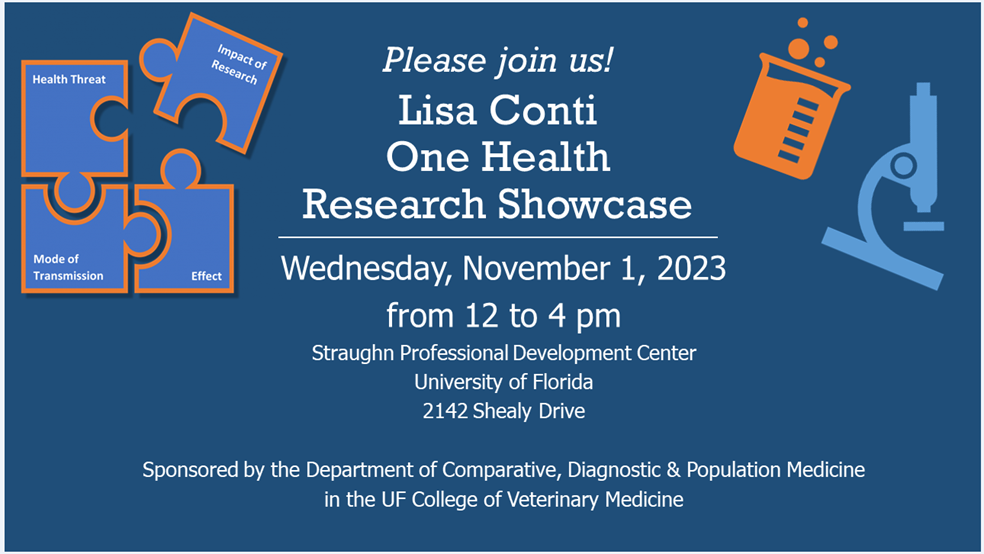
View PublicationLisa Conti One Health Research Showcase, Wednesday November 1, 2023
October 20, 2023
Lisa Conti One Health Research Showcase, Wednesday November 1, 2023
SEE: https://onehealthinitiative.com/wp-content/uploads/2023/10/image002-008.png
IN MEMORIAM:
News
PROMINENT ONE HEALTH INITIATIVE TEAM MEMBER and Public Health LEADER DIES at 57
November 7, 2020
Dr. Lisa A. Conti, Director of Strategic Initiatives and Chief Science Officer, Florida Department of Agriculture and Consumer Services and before that Division Director of Environmental Health, Florida State Public Health Veterinarian and State HIV/AIDS Surveillance Coordinator, the Florida Department of Health (USA)
The One Health Initiative Autonomous pro bono team is deeply saddened to report the November 6th death of our beloved friend and extraordinary One Health colleague, Dr. Lisa A. Conti (1963-2020).
At this time, the One Health Initiative team (OHI) chooses to think about and praise Dr. Lisa A. Conti’s unparalleled contributions to the national and international One Health movement while celebrating her public health leadership over the years. Included among many highlights during her illustrious global public health career was her co-writing and co-editing of the first truly landmark One Health textbook “Human-Animal Medicine – Clinical Approaches to Zoonoses, Toxicants and other Shared Health Risks”: Click Here :: – 1st Edition (2010).”
On a daily basis Lisa was always available to contribute sage advice and counsel to innumerable One Health Initiative team endeavors over the years. Without fanfare, Lisa represented the OHI team in countless national and international speaking commitments. Included among these were travel to Romania, South Korea, Nairobi, Bangkok, Stockholm, London, Trinidad, Puerto Rico, Madrid, Quatar, UAE, and Saskatoon. She was widely admired and appreciated for helping to encourage and edit many professional One Health journal articles and book chapters.
It was routine at all times for Lisa to generously respond promptly—without any hesitation or reservation—to any and all requests for assistance in managing and editing the One Health Initiative website. Essentially, all early and recent significant advances in the worldwide One Health movement by the OHI team reflect Lisa’s presence and engagements in the cause. She was and is irreplaceable and shall be profoundly missed.
Please see BIOGRAPHIES OF Lisa A. Conti, DVM, MPH – View bio https://onehealthinitiative.com/wp-content/uploads/2020/05/Lisa-Conti-Biography-August-2017.pdf and https://abe.ufl.edu/media/abeufledu/banr/ContiL-Bio.pdf.
A Lisa Conti One Health fund has been established at the University of Florida, College of Veterinary Medicine: “… Lisa, never, ever lost sight that any achievement attributed to her was a group effort, and felt extraordinarily lucky to be part of a transdisciplinary team of excellent mentors and dedicated colleagues working toward salubrious solutions.”
Note: No words can adequately express personal feelings for the loss of our dear special cherished wonderful friend and colleague—a truly unique and precious human being— who struggled over three years with a valiant battle against ovarian cancer. Our immediate thoughts go out to her husband, son, many loyal friends and co-workers at the Florida Department of Agriculture and Consumer Services and before that the Florida Department of Health (USA).
https://www.avma.org/javma-news/2021-01-15/obituary-one-health-advocate-public-health-leader-dies
View PublicationRift Valley Fever — The Need for an Integrated Response | NEJM
October 19, 2023
“… The current international response to RVFV relies predominantly on the One Health approach, which involves collaboration, coordination, and communication among communities, physicians, environmental health experts, and veterinarians to prevent and contain outbreaks.4…”
View PublicationWorld Health Organization (WHO) assesses how human health and natural environment are linked
October 18, 2023
“Due to the Covid-19 pandemic, awareness of zoonotic diseases has increased everywhere. These illnesses can be transmitted from animals to human beings. Chronic diseases too are often linked to ecological problems. Healthcare planners should therefore pay more attention to environmental issues, demands a policy paper that was prepared on behalf of the World Health Organization’s European Regional Office.
18.10.2023
The One Health approach emphasizes the interdependency of human, animal and environmental health. More and better cooperation of medical doctors with veterinarians and eco-scientists is important. According to the WHO paper, however, policymakers who focus on health issues tend to neglect the expertise of the latter two groups.
The WHO authors list three main reasons why this must change:
- The natural environment is a reservoir in which substances and nutrients accumulate and circulate. Human-caused pollution with toxins, antibiotics or pathogens eventually finds its way into human bodies.
- Many environmental dynamics have impacts on human health and depend on ecosystems which have been modified by human action. As a result, illnesses evolve faster and pathogen populations increase.
- Environmental interactions lead to genes, pathogens and chemicals being transmitted between humans and animals with impacts on bodies’ immune systems. …”
One Health High-level Meeting on Antimicrobial Resistance (AMR) (europa.eu)
October 18, 2023
“The scope, magnitude and global impact of the emerging infectious diseases we face today, most of them zoonotic in origin, are unprecedented. The need for a One Health approach to address the different challenges related to public, animal and environmental health is indisputable and a clear example of this is antimicrobial resistance.
Antimicrobial resistance (hereafter AMR) has a major clinical, epidemiological and microbiological impact and needs to be addressed from a single or “One Health” perspective. This approach recognises that human and animal health are interdependent and linked to the ecosystems and environment in which they coexist. …”
View PublicationThe Virus Hunters | Duke Today
October 17, 2023
“… Paietta’s work is part of a larger 10-year effort, organized by a nonprofit called Health in Harmony in collaboration with the local community living around the reserve.
Paietta and the Health in Harmony team meet with Takoandra villagers to discuss the virus surveillance project.
The idea is to look at how improving people’s access to food and healthcare also affects biodiversity, deforestation, and disease transmission in the area.
“We’re using a ‘One Health’ approach that looks at the intersection between human health, animal health and environmental health,” since they’re interconnected, Paietta said. …”
View PublicationGlobal One-Health debate is not properly balanced (dandc.eu)
October 15, 2023
“Evidence-based policy
Global One-Health debate is not properly balanced
One Health has become a hot topic in international debate. Experts have emerged over night, and some of them actually lack proper training as well as an understanding of the concept’s history. What humankind now really needs is international cooperation that pays close attention to the experience of low- and middle-income countries. …”
“The modern scientific concept of One Health (OH) has been evolving for over two decades. The term stands for an integrated transdisciplinary approach. It recognises that human health is closely linked to the health of animals, plants and the environment. …”
View PublicationNew coalition to target viral spillovers | CIDRAP (umn.edu)
October 13, 2023
CIDRAP – University of Minnesota
As such, adopting a One Health approach when addressing viral pandemic threats is imperative,” authors wrote in The Lancet. Spillovers are a …
New coalition to target viral spillovers – CIDRAP – University of Minnesota
View PublicationNipah Virus: An Emerging Health Concern | HealthNews
October 12, 2023
“Nipah virus: A One Health disease
So, why should we care about NiV if we don’t live in areas where it is endemic? While, thankfully, NiV isn’t present in the U.S. or outside of Asia, bats in Africa have been identified with the virus. Further, it is a reportable disease per the World Animal Health Organisation (WAHO/OIE). It is also on the WHO’s list of infectious diseases for which urgent research is warranted.
Diseases potentially spreading from a wildlife reservoir (fruit bats) to domestic animals, including pigs with relatively easy transmission to humans, pose a great threat to global health and demonstrate the importance of looking at diseases from a One Health viewpoint. NiV helps provide a good example of how environmental, animal, and human health are intimately intertwined.
Though, to date, NiV has only been identified in specific regions of the world, its spread to other areas should be of concern. Therefore, people working closely with animal species known to harbor the infection or those traveling to areas where the disease has been identified should be aware and cautious.”
View Publication“Bats, Ducks, and Pandemics: An Introduction to One Health Policy”
October 10, 2023
The videos, learning objectives, and reading list will be freely available on YouTube here:
SEE: Bats, Ducks, and Pandemics: An Introduction to One Health Policy
View Publication
Is the latest bird flu a risk to humans? | Newsroom (uw.edu)
October 10, 2023
“Several harbor seals recently tested positive for a strain of H5N1 bird flu on Marrowstone Island in Puget Sound, according to the National Oceanic and Atmospheric Administration West Coast Region. Marrowstone Island sits between Whidbey Island and Port Townsend in Jefferson County.
Although the chances are low that a person in Washington state would become infected, it’s still smart to take precautions, said Dr. Peter Rabinowitz, a professor in the University of Washington schools of Medicine and Public Health.
“It’s really an unprecedented outbreak. The number of countries involved, the number of different types of animals involved, both birds and mammals, is something we’ve absolutely never seen before,” said Rabinowitz, a professor of family medicine and director of the UW’s Center for One Health Research. The center investigates health links between humans and animals and their shared environments. …”
View PublicationMEP Interest Group Annual Meeting: Ensuring a One Health approach to tackle AMR at the EU level – EPHA
October 9, 2023
“Antimicrobial resistance (AMR) was identified by the World Health Organization as one of the top 10 global health threats in 2017. It highlights that if we continue on our current trajectory, we risk entering a pre-antibiotic era, putting at risk the advances of modern medicine. However, tackling AMR is a complex task given the multifaceted nature of the problem and requires a One Health approach. This approach recognises that human health is intertwined with the health of animals and the environment. …”
View PublicationQuick Links
-
Please see MONOGRAPH in Veterinaria Italiana
“One Health – One Medicine”: linking human, animal and environmental health
Read More -
History of the One Health Initiative team and website (April 2006 through September 2015) and the One Health Initiative website since October 1, 2008 … revised to June 2020 and again to date February 2021
Read More -
Vaccines for zoonoses: a One Health paradigm
SciTech Europa Quarterly (March 2018) – Issue 26
Read More -
Pan European Networks SciTech Europa Quarterly
SciTech Europa Vaccines for zoonoses: a one Health paradigm – Pages 227-229 (Read PDF) “One of the One Health Initiative team’s co-founders and leaders is an internationally-recognized eminent physician…
Read More Read PDF