
One Health Publications


Solutions for sustainable livestock production in Asia | East Asia Forum
September 13, 2023
“…In order to effectively manage the threats posed by pests and disease, countries, regions and economic groupings are increasingly promoting a One Health approach. One Health is ‘an integrated, unifying approach that aims to sustainably balance and optimize the health of people, animals and ecosystems’. A key principle of One Health implementation is achieving ‘equity between sectors (e.g., those responsible for human health, animal health and environment health) and disciplines’. To do this, high-level government coordination through bodies such as Ministries of Planning and Finance is essential.
Going forward, the projected growth in demand for animal-source food in Asia must be balanced with the global need for sustainable, safe food systems. This is especially in relation to infectious disease prevention, greenhouse gas emissions and the loss of biodiversity. Livestock production systems and value chains must evolve with increasing adoption of circular and sustainable bioeconomy principles and a functional One Health approach to infectious disease prevention and control. …”
“ … The consultative approaches required to deliver this transformation are underway. The Food and Agriculture Organization of the United Nations is developing a Progressive Management Pathway for Terrestrial Animal Biosecurity. The Quadripartite of the Food and Agriculture Organization, the United Nations Environment Programme, World Health Organization and the World Organisation for Animal Health have launched the One Health Joint Plan of Action 2022–26. ASEAN is also currently developing a One Health Initiative.”
For these consultations to deliver viable solutions, it is crucial that an inclusive, participatory approach be employed. This includes consulting diverse livestock producers and their associations as well as helping cover key production systems and associated value chain participants.
Robyn Alders is Honorary Professor at the Development Policy Centre, ANU, and Senior Consulting Fellow at Chatham House.
View PublicationMalaria epidemiological characteristics and control in Guangzhou, China, 1950–2022 | Malaria Journal | Full Text (biomedcentral.com)
September 11, 2023
“… There is growing awareness of an interdisciplinary approach to disease prevention and control, known as “One Health” [19], which is based on vector control and population and environmental prevention integrated with the diagnosis and treatment of malaria in health care facilities and local, national, and global leadership to implement and fund malaria control programmes [20,21,22,23]. This approach requires the collaborative efforts of public health professionals, doctors, and staff from multiple disciplines and relevant sectoral agencies. The One Health approach has been applied in several countries in Africa, South Asia, and Latin America [24]. …”
View Publication
Other Resources — Medicine For A Changing Planet (Scroll Down: One Health a recognized educational resource)
September 10, 2023
Center for One Health Research
UNIVERSITY OF WASHINGTON
The Center for One Health Research (COHR) at the University of Washington investigates the health linkages among humans, animals and their shared environments. COHR is based in the UW Department of Environmental & Occupational Health Sciences and operates in partnership with the UW Department of Global Health. Learn more.

One Health Initiative
The One Health Initiative is a movement to forge co-equal, all inclusive collaborations between physicians, osteopathic physicians, veterinarians, dentists, nurses, and other scientific-health and environmentally related disciplines. Learn more.

One Health Commission
The One Health Commission seeks to raise awareness and to educate all audiences about the importance of transcending institutional and disciplinary boundaries to transform the way that human, animal, plant, and ecosystem health professionals work together for the health of all living things and the planet. Learn more.

To tackle antimicrobial resistance a global One Health approach is needed (business-standard.com)
September 7, 2023
“… The ultimate aspiration is to bridge the gap between knowledge and action, delivering an unparalleled integrated One Health—Climate Risk framework that will empower policymakers, health care professionals, and communities to mitigate risks and bolster resilience.”
View PublicationTo tackle antimicrobial resistance a global One Health approach is needed (business-standard.com)
September 7, 2023
India was one of the first few countries to develop a comprehensive national plan to manage the misuse of antimicrobials
“… To address the multifaceted issue of AMR, a “One Health” approach involving multiple sectors is being propounded as an effective framework. The term “One Health” originated during the emergence of severe acute respiratory syndrome (SARS) in 2003-2004, underscoring the interconnectedness between human and animal health and the threats that diseases pose to food supplies and global economies. This concept acknowledges that the health of humans, animals and the environment are integrally intertwined and it encourages all sectors connected to health to be aware of how they contribute to the spread of antimicrobial resistance and in turn, act responsibly. ‘One Health’ represents a collaborative endeavour involving government agencies, academia, and the private sector to address these challenges and provide sustainable solutions through an integrated approach to healthcare.
Several countries and many international agencies have employed the One Health approach while designing their action plans to tackle AMR. The proposed action points include infection control, sanitation, surveillance, improvements in antimicrobial use, strengthened regulation, targeted policies etc. Only some countries have developed action plans to tackle AMR, highlighting the need for a unified approach. …”
View PublicationUniversity of Washington (UW), Stanford launch resource to help health care professionals respond to climate concerns
September 6, 2023
“[Dr.] Rabinowitz is also a physician in UW Medicine’s Infectious Diseases and Tropical Medicine Clinic and director of the UW Center for One Health Research …”

Why current therapy does not cure asthma | JAA (dovepress.com)
September 4, 2023
“The One Health approach, an interdisciplinary strategy with focal point on human, animal, and environmental health interconnections, appears to be the right tool for researching asthma prevention and treatment”
Abstract: Asthma continues to be a disease for which there is no cure, even if it can be very well controlled with the appropriate therapies, which take into account the specific phenotype. The paradox of asthma is that asthma can heal spontaneously, albeit in a small percentage of cases. This observation is highly relevant, since understanding the mechanisms of spontaneous healing can pave the way for new strategies for treating asthma. It is likely that the lack of cure for asthma is due to the fact that current therapies target downstream mediators of the inflammatory response. Asthma can be considered a response of maladaptation of the airway epithelium to the environment, through the orientation of the innate immunity towards an inflammatory response. The important effect of the environment on asthma progress comes from interventions which help children who live in disadvantaged urban neighborhoods move to higher resourced neighborhoods. It is quite interesting that the magnitude of decrease of exacerbations associated with moving was larger than the effect of inhaled corticosteroids and similar to that observed for the effect of biologic agents. Alpine altitude climate treatment is a natural treatment that targets biological pathway, improving various outcomes such as asthma control and quality of life, exacerbation rate and hospitalizations. If as researchers we want to set ourselves the goal of achieving complete remission of asthma, without the need for ongoing maintenance treatment, we need to change the approach to finding new asthma treatment strategies. The One Health approach, an interdisciplinary strategy with focal point on human, animal, and environmental health interconnections, appears to be the right tool for researching asthma prevention and treatment.
View PublicationSKUAST-K brainstorms institutionalising One Health in J&K (brighterkashmir.com)
September 4, 2023
“One Health is an approach that recognizes that the health of people is closely connected to the health of animals and the shared environment. Though …”
View PublicationUTMB One Health Newsletter – Issue 19, September 2023
September 1, 2023
Advancing Health Care in Humans, Animals and the Environment
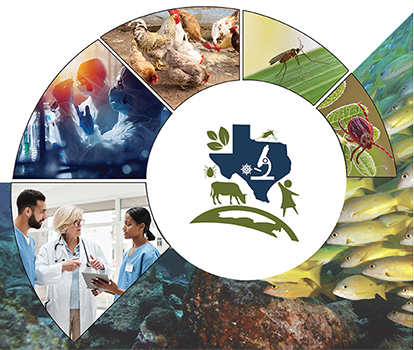

SEE One Health at UTMB Advancing Health in Humans, Animals and the Environment on Vimeo (https://vimeo.com/834561067)
Provided to the One Health Initiative team/website by:
Brianna Kreditor, MPH
Research Associate II, Internal Med-Infectious Diseases
UTMB One Health Laboratory
Department of Internal Medicine (Infectious Diseases)
The University of Texas Medical Branch
301 University Blvd., Galveston, TX 77555-0435
View PublicationUse of mesenchymal stem cells for tendon healing in veterinary and human medicine: getting to the “core” of the problem through a one health approach in: Journal of the American Veterinary Medical Association – Ahead of print (avma.org)
August 30, 2023
Abstract
The purpose of this manuscript, which is part of the Currents in One Health series, is to take a comparative approach to stem cell treatment for tendon injury and consider how the horse might inform treatment in other veterinary species and humans. There is increasing experimental and clinical evidence for the use of bone marrow–derived mesenchymal stem cells to treat tendon injuries in the horse. The same evidence does not currently exist for other species. This manuscript will review why the equine superficial digital flexor tendon core lesion might be considered optimal for stem cell delivery and stem cell interaction with the injury environment and will also introduce the concept of stem cell licensing for future evaluation. The companion Currents in One Health by Koch and Schnabel, AJVR, October 2023, addresses in detail what is known about stem cell licensing for the treatment of other diseases using rodent models and how this information can potentially be applied to tendon healing.
View Publication
Our Genetic Legacy: How It Protects Us and How It Doesn’t – Impakter
August 28, 2023
Our ancestor’s genes provided plague protection but may have also caused negative autoimmune system effects: What this may mean when a new virus strikes us in the future
“Could evolutionary genetics – the study of our genes over time – come to our aid in fighting future pandemics? We have been coping with widespread infectious diseases including HIV/AIDS, and a series of COVID pandemics – many of which have been tamed and cured. What is not known is how well we will cope with the next infectious disease threat and, as I recently argued, it’s time to get serious about preventing pandemics. The extent to which our twenty-first-century systems will be able to effectively respond is still unknown. But new groundbreaking scientific efforts have been looking back and forward to gauge and enhance our capacity to deal with whatever comes next. …”
View Publication1st One Health & One Welfare Latin American Congress: November, 22-24, 2023
August 25, 2023
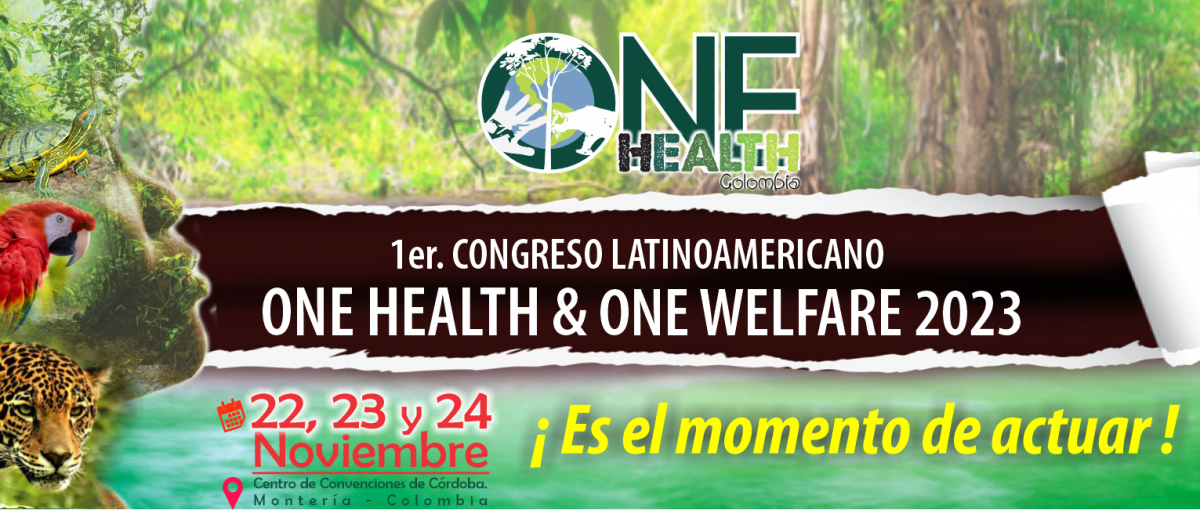
The Event
It is a unique interdisciplinary platform that brings together professionals and experts in human health, animal health, environmental and plant health. With the participation of world-renowned speakers, both national and international, this event is emerging as a fundamental space for the exchange of knowledge and advances in the One Health and One Welfare approach.
The congress will have participants from various areas, such as medicine, nursing, bacteriology, biology, veterinary medicine, animal husbandry, environmental engineering, food engineering and many others. This wide variety of disciplines allows for a comprehensive approach to the interconnectedness of human, animal, environmental and plant health.
View Publication
Cureus | Unraveling Monkeypox: An Emerging Threat in Global Health | Article
August 24, 2023
Prospective research endeavors should strive to enhance our comprehension of the natural reservoirs of monkeypox and its transmission dynamics, evaluate sustained immune responses to novel vaccines, and investigate the potential impact of One Health strategies.
“Abstract
Monkeypox, a viral zoonotic ailment originating in the Central and West African regions, has escalated into a global health issue of growing concern. The current analysis offers an exhaustive examination of monkeypox, emphasizing its historical progression, etiology, epidemiological patterns, pathophysiological mechanisms, clinical manifestations, diagnostic methodologies, treatment modalities, and preventive strategies. The worldwide discontinuation of smallpox vaccination has contributed to an increased incidence of monkeypox, driven by the expansion of vulnerable host populations. Significant strides in diagnostic procedures, prospective antiviral treatments, and vaccine development exhibit potential in managing this affliction, yet obstacles remain in terms of disease control, prevention, and treatment. Additionally, the international propagation of monkeypox underscores the need for robust public health initiatives and the significant role played by global health institutions in disease containment. Prospective research endeavors should strive to enhance our comprehension of the natural reservoirs of monkeypox and its transmission dynamics, evaluate sustained immune responses to novel vaccines, and investigate the potential impact of One Health strategies. This analysis underscores the pressing necessity for increased research and synchronized global efforts to tackle this emergent infectious malady.”
View PublicationQuick Links
-
Please see MONOGRAPH in Veterinaria Italiana
“One Health – One Medicine”: linking human, animal and environmental health
Read More -
History of the One Health Initiative team and website (April 2006 through September 2015) and the One Health Initiative website since October 1, 2008 … revised to June 2020 and again to date February 2021
Read More -
Vaccines for zoonoses: a One Health paradigm
SciTech Europa Quarterly (March 2018) – Issue 26
Read More -
Pan European Networks SciTech Europa Quarterly
SciTech Europa Vaccines for zoonoses: a one Health paradigm – Pages 227-229 (Read PDF) “One of the One Health Initiative team’s co-founders and leaders is an internationally-recognized eminent physician…
Read More Read PDF