
One Health Publications
Building Trust Through Transparency in Biorisk Management – NYAS
May 14, 2024
New York Academy of Sciences
Our mission aligns with the One Health approach, which optimizes the health of people, animals, and ecosystems, and recognizes the interdependence …
View PublicationSafeguarding Against H5N1 Influenza Spillover: Protecting Human, Animal, and Environmental Health (infectioncontroltoday.com)
May 11, 2024
Discover strategies to combat H5N1 influenza spillover in cattle, emphasizing collaborative efforts to ensure the safety of human, animal, and environmental well-being.
“In the face of complex health challenges, the One Health approach is an example of collaboration and innovation, intertwining human, animal, and environmental health perspectives. Gregory C. Gray, MD, MPH, a proponent of this approach, illuminated its benefits in the context of avian flu or H5N1.
Gray is the Robert E. Shope, MD, professor in infectious disease epidemiology in the Departments of Internal Medicine (Infectious Diseases), Microbiology & Immunology, Global Health & Emerging Diseases at the University of Texas Medical Branch in Galveston, Texas.
“Whenever we encounter complex problems that require multiple disciplines, professionals, and institutions, One Health is a great way to go,” Gray told Infection Infection Control Today® (ICT®) in an exclusive interview. …”
World Veterinary Association (WVA) Newsletter April 2024 – President’s Message
May 10, 2024

John de Jong, DVM, President
|
View Publication
Announcing Launch of K. Lisa Yang Wildlife Health Fellows Program – Cornell University, College of Veterinary Medicine (academicprogramsonline.org)
May 9, 2024
| Program ID: | Cornell–DeansOffice–YANGFELLOW [#27622] |
| Program Title: | Cornell K. Lisa Yang Center for Wildlife Health K. Lisa Yang Wildlife Health Fellow |
| Program Type: | Fellowship or award |
| Program Location: | Ithaca, New York 14853, United States [map] |
| Subject Area: | Wildlife Health |
| Stipend: | $65,000-$85,000 |
| Appl Deadline: | 2024/08/31 11:59PM (posted 2024/05/09, listed until 2024/11/09) |
| Program Description: | Apply |
Provided by:
Steven A. Osofsky, DVM
Jay Hyman Professor of Wildlife Health & Health Policy
Cornell University, College of Veterinary Medicine
Director, Cornell K. Lisa Yang Center for Wildlife Health
Director, AHEAD Program
https://wildlife.cornell.edu/people/steve-osofsky
@WildlifeCornell
View PublicationONE HEALTH
May 8, 2024
From climate change to antimicrobial resistance, many of the threats to health and well-being facing Europe are linked to unsustainable patterns of production and consumption. The One Health approach recognises that these threats can only be addressed through multisectoral and transdisciplinary collaboration across the domains of human, animal, plant and ecosystem health. The European Environment Agency (EEA) works together with other EU agencies and institutions to support the implementation of the One Health approach in Europe.
View Publication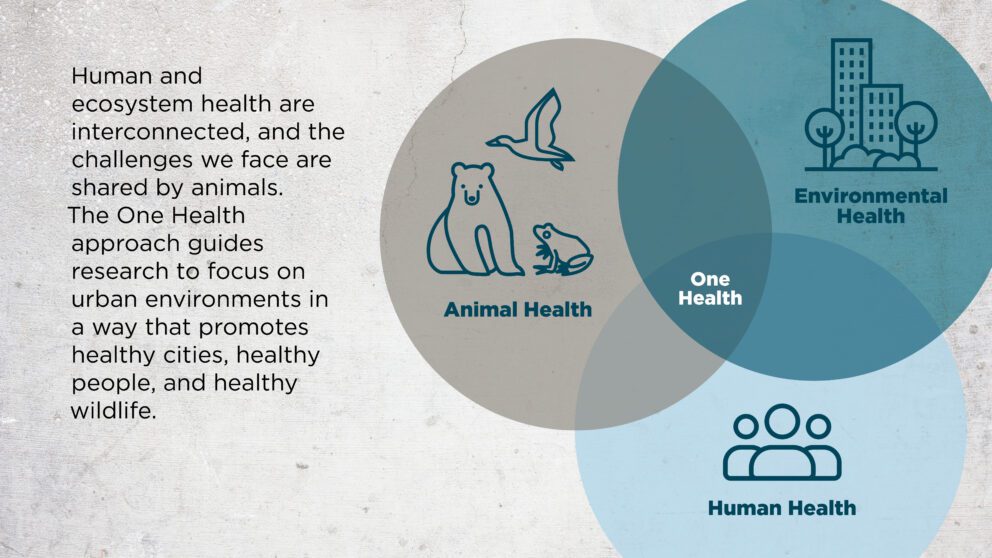
UTMB One Health Newsletter – Issue 27, May 2024
May 1, 2024
Advancing Health Care in Humans, Animals and the Environment
What You Need to Know About Bird Flu – Chasing Life with Dr. Sanjay Gupta – Podcast on CNN Audio
April 30, 2024
Prof. Michael Osterholm:
“If there’s ever a good time to talk about that concept of one health, animals and humans together, this is it. You know, the real potential for human-related disease, and particularly a pandemic potential is all tied with these animals.”
View PublicationTime to prepare for the next pandemic? – Centre for Pandemics and One-Health Research (uio.no)
April 30, 2024
Faculty of Medicine
“… We have an interdisciplinary focus on pandemic management
At the Center for Pandemics and One-Health Research (P1H), our research is aiming to shed light on how we can best prepare for the next pandemic. …”
View PublicationAmerican Public Health Association (APHA) One Health Newsletter
April 27, 2024

See APHA One Health Newsletter
View PublicationPutting genomic surveillance of pathogens at the forefront of future pandemic preparedness (news-medical.net)
April 27, 2024
“… A vital head start
Most illnesses not seen before in humans are zoonoses-;diseases found in animals that infect humans. Many diseases in animals are also treated with antibiotics and other antimicrobials that are used for humans. However, the widespread use of antimicrobials in humans and animals has led to resistance, as microbes evolve to survive. So we face two major, overlapping public health threats: one from new infectious diseases that are zoonoses, and one from rising antimicrobial resistance. Tackling these threats requires a collaborative One Health approach-;championed by the World Health Organization (WHO)-;which recognizes that human health is dependent on the health of our ecosystem. …”
View PublicationVeterinarians Needed More Than Ever Given Pandemic Risk – Impakter
April 26, 2024
The problem is that they are in short supply, and up to 70% of infectious diseases originate in animals
View PublicationOne Health Happenings – Volume 11, No. 4, April 25, 2024
April 26, 2024

Volume 11, No. 4, April 25, 2024
Sharing news from mid-March to mid-April 2024

Bangladesh: Better we prepare as another pandemic coming soon: Prof Nitish Debnath
April 25, 2024
Zoonotic diseases, like the Spanish flu and COVID-19, highlight this threat, exacerbated by climate change
View PublicationCAHNR One Health Initiatives Addressing Human, Animal, and Environmental Issues – UConn Today
April 23, 2024
From a unique, university-wide conference to new curricula and innovative research, CAHNR is leading efforts in One Health approaches at UConn
View PublicationInternational Mother Earth Day: One Health for a healthy Earth: A symbiotic approach for International Mother Earth Day
April 20, 2024
“This International Mother Earth Day, let’s celebrate the interconnectedness of all living things. The One Health approach embodies this very spirit, recognizing the profound link between the health of humans, animals, and our shared environment. …”
View PublicationQuick Links
-
Please see MONOGRAPH in Veterinaria Italiana
“One Health – One Medicine”: linking human, animal and environmental health
Read More -
History of the One Health Initiative team and website (April 2006 through September 2015) and the One Health Initiative website since October 1, 2008 … revised to June 2020 and again to date February 2021
Read More -
Vaccines for zoonoses: a One Health paradigm
SciTech Europa Quarterly (March 2018) – Issue 26
Read More -
Pan European Networks SciTech Europa Quarterly
SciTech Europa Vaccines for zoonoses: a one Health paradigm – Pages 227-229 (Read PDF) “One of the One Health Initiative team’s co-founders and leaders is an internationally-recognized eminent physician…
Read More Read PDF