
One Health Publications
One Health: The International Community Takes A New Step Forward (Impakter)
July 2, 2022
This is One Health’s year of recognition, with the World Bank’s latest fund for pandemic response… But what about more and sustained action?
by *Richard Seifman July 2, 2022 in Health, Politics & Foreign Affairs
*Member One Health Initiative Advisory Board
View PublicationFOR IMMEDIATE RELEASE – World Bank Approves New Fund for Pandemic Prevention, Preparedness and Response (PPR) includes One Health Financing Possibilities
July 1, 2022
ONE HEALTH INITIATIVE TEAM: Press Release

FOR IMMEDIATE RELEASE
July 1, 2022
World Bank Approves New Fund for Pandemic Prevention, Preparedness and Response (PPR) includes One Health Financing Possibilities
“Will the FIF also fund activities related to One Health (intersection between human health, animal health and environment)?
Yes, activities related to One Health, which recognize that human and animal health are interdependent and bound to the health of the ecosystems they share, will be eligible for financing from the FIF. A multi-sectoral One Health approach is central to the prevention of public health risks.”
____________________
With broad support from the G20, on June 20, 2022 the World Bank Board of Directors approved establishment of a Financial Intermediary Fund (FIF) whose purpose will be to address pandemic prevention, preparedness, and response (PPR). Already over $1 billion commitments have been announced. These and other new resources will be to assist low and middle-income countries increase their pandemic investments, improve coordination among partners, and serve as a platform for advocacy.
FIF will seek to strengthen country capacity in areas such as disease surveillance, laboratory systems, health workforce, emergency communication and management, and community engagement; as well as strengthening regional and global capacity in data sharing, regulatory harmonization, and coordinated development, procurement, distribution and deployment of countermeasures and essential medical supplies.
The World Bank will administer the FIF with technical expertise provided by the World Health Organization, both working closely with donors and other partners. The FIF scope and design is a work in progress but indications of what is likely to be included is contained in an accompanying FIF Fact Sheet. It states, “A multi-sectoral One Health approach is central to the prevention of public health risks.”
The plan is to launch the FIF in three-to- four months. That time should be used to have countries and regional leaders begin to consider ways to be ready with One Health policies, programs, and projects.
________________________________________________
View Publication
In Wartime, Mental Health and One Health Are Casualties – Impakter
June 30, 2022
by *Richard Seifman, JD, MBA June 30, 2022 in Health, Politics & Foreign Affairs
Ukraine is the latest example of the damage caused by war on human health, animals and the environment; external partners can help reduce losses
“Mental Health and One Health, the latter being the interface of human/animal/ecosystem health, address largely different scientific research, methods, public awareness and actions. Yet both face unanticipated challenges as a result of the Russian invasion, putting much greater burdens on an already overwhelmed Ukraine Government. External allies and donors can direct some of their human and financial resources to these non-military needs. Doing so will have multiple benefits, including helping to move Ukraine’s candidacy for European Union membership one step further.
Why should we address these two subjects together? What mental health and One Health have in common are supportive pronouncements by experts and public authorities, limited numbers of fully trained practitioners, and insufficient funding to do what is needed and known effective in crisis situations. Typically, neither are attentive to the other’s pursuits, scientific issues, and responses. This is partly because the disciplines have very different professional education and interests, and operational focus. But in this conflict situation, there are commonalities. …”
*Member, One Health Initiative team Advisory Board.
View PublicationOne Health approach: Time for implementation – EURACTIV.com
June 29, 2022
“In the wake of the COVID pandemic, and with the race against antibiotic resistance becoming ever more pressing, it is more important than ever to make the ‘One Health’ approach a reality.
The idea is to create a collaborative, cross-cutting approach which recognises the interconnections between people, animals, plants, and their shared environment with a view to achieving optimal health and well-being outcomes.
In this Event Report, EURACTIV explores how this concept can go from words to action and what role healthy animals play for One Health, in terms of producing safe and sustainable food but also in preventing outbreaks of diseases and their transmission between other animals or people. …”
View PublicationLarge Scale Genome-Centric Metagenomic Data from the Gut Microbiome of Food-Producing Animals and Humans | Scientific Data (nature.com)
June 26, 2022
“ … The One Health concept is a global strategy to study the relationship between human, animal, and environmental health. The exchange of pathogenic and non-pathogenic microorganisms among these settings, associating the interconnection between humans, animals, and the environment, has been the main focus of one health study10. …”
Lemos, L.N., de Carvalho, F.M., Santos, F.F. et al. Large Scale Genome-Centric Metagenomic Data from the Gut Microbiome of Food-Producing Animals and Humans. Sci Data 9, 366 (2022). https://doi.org/10.1038/s41597-022-01465-5
View Publication
Saudi Arabia offers support to G20’s Global Epidemic Initiative | The Paradise News
June 25, 2022
“ … Eng Fahd Al-Jalajel, the Saudi Minister of Health, recently emphasised the importance of bolstering global health systems and improving coordination through the implementation of the “One Health” approach. …”
View PublicationUniversity of Nicosia: Preparing students to be great vets (studyinternational.com)
June 24, 2022
Promoted by UNIVERSITY OF NICOSIA MEDICAL SCHOOL
“ … UNIC Vet School further encourages multidisciplinary excellence by encouraging its DVM cohort to study closely and conduct research with other medical and health students at UNIC. This level of collaboration ensures the programme truly enhances the holistic concept of One Health.
“The close synergies between the School of Veterinary Medicine, the Medical School and other health-related departments at UNIC create exciting research and interprofessional learning opportunities for our students,” confirms Professor Malas. “We are at the forefront of offering holistic veterinary medicine that meets the collective health and safety needs of the modern world. This approach to global public health education is unparalleled.” …”
View PublicationMinister for Health and Minister for Agriculture, Food and the Marine support cross government and cross sectoral actions on One Health
June 24, 2022
Press release
From Department of Health; Department of Agriculture, Food and the Marine
Published on 23 June 2022
Last updated on 23 June 2022
View PublicationFood Security and Medical Support: Animals Need It Too – Impakter
June 23, 2022
One Health Initiative [website] Editor’s Note: Also see dynamic extensive recognition of the criticality of institutionalizing the One Health concept/approach worldwide by many visionary One Health Impakter articles!
View PublicationSaudi announces support to G20’s global pandemic initiative (tradearabia.com)
June 22, 2022
RIYADH, 1 days ago
“Saudi Arabia has announced its support to G20’s working group on the global pandemic Preparedness Prevention and Response (PPR), and the need to ensure sustainable funding to combat global health security threats.
Saudi Health Minister Eng Fahd Al-Jalajel stressed the need to strengthen global health systems and enhance coordination through the ‘One Health’ approach.
This came during his speech delivered virtually on June 20, to the meeting of G20 health ministers held in Jakarta. …”
View PublicationOne Health at FDA: From Concept to Application – 07/14/2022 | FDA
June 21, 2022
- Date:
- July 14, 2022
- Time:
- 12:00 PM – 1:00 PM ET
CAPT Brianna Skinner, DVM, MPH, DACLAM
Senior Regulatory Veterinarian
Office of Counterterrorism and Emerging Threats (OCET)
Food & Drug Administration (FDA)
Annamaria Castiglia, DVM
One Health Coordinator
Center of Veterinary Medicine (CVM)
Food and Drug Administration (FDA)
CAPT Brianna Skinner is a Commissioned Corps Officer in the U.S. Public Health Service currently assigned to the Office of Counterterrorism and Emerging Threats (OCET) at the U.S. Food and Drug Administration (FDA) as a Senior Regulatory Veterinarian. She serves as a co-lead for the operations of FDA’s One Health Steering Committee, as senior staff advisor for FDA’s Animal Welfare Council and as an animal model expert for the administration of policies to facilitate the availability of safe and effective medical countermeasures in OCET. Prior to transferring to the FDA, she worked at the Centers for Disease Control and Prevention leading clinical operations within the vivarium and consulting with principal investigators on animal care and use with infectious disease research. She earned her Doctor of Veterinary Medicine degree from Tuskegee University, her Master’s in Public Health from Benedictine University, and is board certified in laboratory animal medicine with the American College of Laboratory Animal Medicine.
Dr. Annamaria Castiglia is a Veterinary Medical Officer currently working for the Center of Veterinary Medicine (CVM) in the Office of the Director as the CVM One Health Coordinator. Prior to her position at FDA, she worked in Small Animal Practice and the Animal Health Industry both domestically and internationally. In 1999, she was relocated by Hoffman La Roche-Animal Health to Washington, D.C. to represent them on Capitol Hill. During that year she completed her Lobbying Training Programs in Washington, D.C. In 2005-2019, she joined the One Health Academy as the coordinator in Washington, D.C. and was a member of the One Health Academy Board of Directors. She earned her Doctor of Veterinary Medicine degree from Bologna University, in Bologna Italy. She also completed the following post graduate programs: small animal medicine at the Animal Medical Center, New York City, New York; food animal medicine at the University of Pennsylvania Veterinary College, and swine health and management at Michigan State University and Iowa State University.
About the Presentation
The One Health concept works at the interconnection of three domains: human, animal, and environmental health. One Health presents a more holistic view of the U.S. Food and Drug Administration’s (FDA) mission. The FDA’s efforts to improve health go beyond recognizing disease transmission through an isolated lens of human health and acknowledge human-animal interactions and associated environmental factors. The One Health concept’s convergence already exists in the FDA’s mission statement when considering the Agency’s responsibilities and authorities. The Agency fulfills its mission to benefit both people and animals by ensuring the safety and efficacy of regulated products such as food or feed, drugs, devices, and human biologics. It regulates the manufacturing, marketing, and distribution of regulated products to ensure that safety and quality standards are met that benefit both people and animals. The Agency utilizes a multidisciplinary and multisectoral approach to gathering data that enhances more informed, evidence-based regulatory decisions when establishing standards and guidance. Last but not least, FDA coordinates regulatory pathway measures fostering the advancement of medical countermeasures that diagnose, prevent, protect, and treat conditions derived from intentional or unintentional emerging threats for chemical, biological, radiological, or nuclear materials. These threats hold no boundaries and can adversely impact people and animals alike. This presentation will describe the One Health concept and how it applies to FDA’s regulatory mission. It will also explain FDA’s application of the One Health concept in its regulatory activities.
Learning Objectives
- Describe the One Health concept.
- Examine how FDA applies the One Health concept in its activities.
- Explain how FDA’s application of the One Health concept has national and international reach.
- Discuss some One Health challenges.
- Explore what the future may look like as FDA adopts a One Health approach.
To Register
FDA employees must register in both LMS and Webcast. After Webcast registration, you will receive a link via email to access the live webinar. You must log in with the username and password created when you registered. Please pre-register at least two days before the event to ensure you receive the access link and outlook invitation for the session.
If you are not an FDA employee, register for the webcast only by clicking the Webcast Registration hyperlink below and then follow the instructions on the registration page.
- LMS Registration *FDA Employees only.
- Webcast RegistrationExternal Link Disclaimer *All participants MUST register for webcast to view FDA Grand Rounds!
For technical assistance please contact: Madison.Hanson@fda.hhs.gov
View Publication
Multi-country monkeypox outbreak: Situation Update (17 June 2022) – World | ReliefWeb
June 19, 2022
One Health
Various wild mammals have been identified as susceptible to monkeypox virus in areas that have long experienced monkeypox. These include rope squirrels, tree squirrels, Gambian pouched rats, dormice, non-human primates, among others. Some species may have asymptomatic infection. Other species, such as monkeys and great apes, show skin rashes typical of those found in humans. Thus far, there is no documented evidence of domestic animals or livestock being affected by monkeypox virus. There is also no documented evidence of human-to-animal transmission of monkeypox. However, there remains a hypothetical risk of human-to-animal transmission; as such appropriate measures such as physical distancing of persons with monkeypox from domestic pets, proper waste management to prevent the disease from being transmitted from infected humans to susceptible animals at home (including pets), in zoos and wildlife reserves, and to peri-domestic animals, especially rodents.
View PublicationWhy One Health is Key To Address Future Pandemics
June 18, 2022
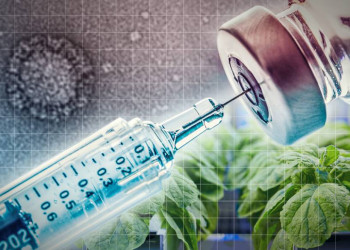
As future pandemics are likely to emerge from the coronavirus family of viruses and other zoonotic pathogens, an integrated approach to develop vaccines for zoonotic diseases is essential for success
by Craig Carter, DVM, PhD, Thomas Monath, MD and Rohini Roopnarine
View PublicationThe heartbeat of One Health | Environmental & Occupational Health Sciences (washington.edu)
June 18, 2022
“ … Broadening the field of One Health
Ramirez has watched—and helped shape—changes in how the field of One Health works.
Now, there’s less “helicopter research,” with scientists dropping in to conduct field studies and never reporting back to the community with the findings, she said.
Instead, “we’re doing a lot of capacity-building where we’re helping young scientists increase their abilities to address emerging needs and interviewing indigenous knowledge-keepers and scientists to learn how they approach One Health,” she said.
Her next project: Seeking larger, more sustainable funding sources to continue to grow COHR and the One Health Clinic in response to demand.
In a way, the COVID-19 pandemic is helping her make the case. “Now, everybody knows what zoonotic disease is, and there’s a lot of interest in emerging infectious diseases. I’m hoping that will bring more funders to this research,” she said.”
View PublicationQuick Links
-
Please see MONOGRAPH in Veterinaria Italiana
“One Health – One Medicine”: linking human, animal and environmental health
Read More -
History of the One Health Initiative team and website (April 2006 through September 2015) and the One Health Initiative website since October 1, 2008 … revised to June 2020 and again to date February 2021
Read More -
Vaccines for zoonoses: a One Health paradigm
SciTech Europa Quarterly (March 2018) – Issue 26
Read More -
Pan European Networks SciTech Europa Quarterly
SciTech Europa Vaccines for zoonoses: a one Health paradigm – Pages 227-229 (Read PDF) “One of the One Health Initiative team’s co-founders and leaders is an internationally-recognized eminent physician…
Read More Read PDF