
One Health Publications
One Health Happenings News Notes – February 2022
February 28, 2022
|

|
|

|
Tackling food insecurity requires a ‘One Health’ approach | Opinion – Knoxville News Sentinel
February 25, 2022
A One Health approach looks at the intersection of the health of people, animals, plants and the environment to address wicked problems.
View PublicationA Focus on Methodology: A Mixed-Methods Approach to Conduct a Comprehensive Evaluation of the Need for One Health Education for Medical and Veterinary Students in the Context of COVID-19 – Rohini R Roopnarine, Ellen Boeren, 2022 (sagepub.com)
February 24, 2022
“Conclusion:
The comprehensive assessment of the student and faculty perspectives, obtained using an MMR approach, illustrated that the incorporation of OH competencies within the MD and DVM curricula are crucial for preparing students for practice in the global environment. The dual degree pathway provides insight into how OH can be successfully incorporated within the curricula of these programmes.”
View PublicationFrontiers | Participation in One Health Networks and Involvement in the COVID-19 Pandemic Response: A Global Study | Public Health (frontiersin.org)
February 24, 2022
“The COVID-19 pandemic exemplifies a One Health issue at the intersection of human, animal, and environmental health that requires collaboration across sectors to manage it successfully. The global One Health community includes professionals working in many different fields including human medicine, veterinary medicine, public health, ecosystem health, and, increasingly, social sciences. The aims of this cross-sectional study were to describe the involvement of the global One Health community in COVID-19 pandemic response activities. One Health networks (OHNs) have formed globally to serve professionals with common interests in collaborative approaches. We assessed the potential association between being part of an OHN and involvement in COVID-19 response activities. Data were collected in July-August 2020 using an online questionnaire that addressed work characteristics, perceived connection to OHNs, involvement in COVID-19 pandemic response activities, and barriers and facilitators to the involvement. The sample included 1,050 respondents from 94 countries across a range of organizations and work sectors including, but not restricted to, those typically associated with a One Health approach. Sixty-four percent of survey respondents indicated involvement in pandemic response activities. Being part of an OHN was positively associated with being involved in the COVID-19 response (odds ratio: 1.8, 95% confidence interval: 1.3–2.4). Lack of opportunities was a commonly reported barrier to involvement globally, with lack of funding the largest barrier in the WHO African region. This insight into diverse workforce involvement in the pandemic helps fill a gap in the global health workforce and public health education literature. An expanded understanding of the perceived roles and value of OHNs can inform targeted interventions to improve public health education and workforce capacity to prepare for and respond to public health emergencies. …”
View Publication
Seeing the Big Picture | UC Davis Magazine
February 23, 2022
The Rx One Health Field Institute at UC Davis teaches the next generation of One Health problem solvers.
View PublicationJohnson Center defines trends for nonprofit sector – Grand Rapids Business Journal
February 20, 2022
“… Researchers point to the Centers for Disease Control and Prevention’s One Health Initiative, a local to global effort to achieve optimal health outcomes by focusing on relationships of people, animals, plants and their environment, as one source of the shift.
“We’ve seen there’s been increasing attention to animal welfare as we’ve seen the CDC creating the One Health Initiative. We’re really deepening our understanding of the interdependence of animals and humans as we see diseases that can get transferred back and forth,” Behrens said. “So, I think that’s one example where heightened attention to animal welfare is kind of accelerated a bit by the pandemic.”
While companion animal welfare continues to grow, a shift toward farmed animal interests and a heightened focus on food systems, specifically, also is increasing as it continues to contribute to climate change and disproportionately negatively affect communities of color, according to the study. Report sources from Humane Society International “estimated funding for all farmed animal issues had grown from roughly $5 million to $50 million over the past 15 years — a 900% increase.” … “
View PublicationPirbright receives grant to develop Nipah virus vaccine (nationalhogfarmer.com)
February 19, 2022
“Pirbright researchers have been awarded £389,089 to develop a Nipah virus vaccine that could protect pigs and prevent disease in humans. …”
View PublicationBurden of Cryptosporidium infections in the Y | EurekAlert!
February 18, 2022
“… In this article the authors review the burden of Cryptosporidium in the Yangtze River Delta at the human-animal-environment interface, as reported since 2001, and identify the deficiencies and challenges in epidemiological studies of Cryptosporidium in this region from a One Health perspective, to provide basic information for the formulation of prevention and control strategies.”
View PublicationLooking Beyond COVID: New Vaccines Needed to Prevent Other Outbreaks – Impakter
February 17, 2022
Prevention is major lesson from current pandemic and the Nipah virus vaccine now under development shows the way forward
“…A One Health Prevention Opportunity
The Nipah Virus represents potentially a major threat, an infectious disease of animal origins, deadly to humans, and capable of spreading to new environments, having already been found in pockets of one of the most densely populated regions in the world. Getting a Nipah vaccine developed and then produced combines both “prevention” and “preparedness” – a win-win situation for us all.
Having a Nipah Virus vaccine in place before major infections break out on a massive scale is the essence of “prevention” and an integral part of an effective One Health approach. We need it. We should not ever have a repeat of Covid or Ebola. …”
View Publication
Zoonoses and Wildlife: One Health Approach – Animals – MDPI
February 16, 2022
Zoonoses and Wildlife: One Health Approach – Animals – MDPI
Zoonoses and Wildlife: One Health Approach … Research Laboratory, Spanish National Centre for Microbiology, Health Institute Carlos III, Ctra.
View Publication

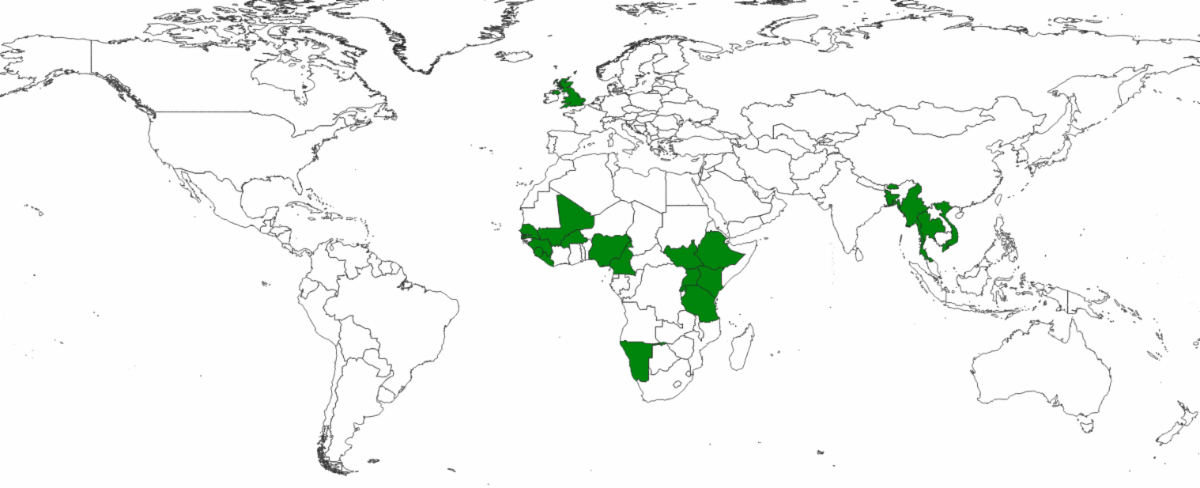
ONE HEALTH STRATEGIC ACTION PLANS – One Health Commission
February 11, 2022
|
|
|
One Health Center of Excellence – University of Florida, Institute of Food and Agricultural Sciences – UF/IFAS (ufl.edu)
February 11, 2022

Also please see LATEST RESEARCH ARTICLE: “THERMOSTABLE VACCINES IN VETERINARY MEDICINE: STATE OF THE ART AND OPPORTUNITIES TO BE SEIZED” https://onehealth.ifas.ufl.edu/activities/projects/.
View Publication
From concept to action: a united, holistic and One Health approach to respond to the climate change crisis | Infectious Diseases of Poverty | Full Text (biomedcentral.com)
February 10, 2022
Abstract
It is unequivocal that human influence has warmed the planet, which is seriously affecting the planetary health including human health. Adapting climate change should not only be a slogan, but requires a united, holistic action and a paradigm shift from crisis response to an ambitious and integrated approach immediately. Recognizing the urgent needs to tackle the risk connection between climate change and One Health, the four key messages and recommendations that with the intent to guide further research and to promote international cooperation to achieve a more climate-resilient world are provided.
View PublicationFeedlots may be contributing to antibiotic resistance – The Cattle Site
February 9, 2022
“… UNE animal health researchers work with the global One Health initiative in mind. One Health recognises that the health of people is connected to the health of animals and our shared environment.”
View PublicationQuick Links
-
Please see MONOGRAPH in Veterinaria Italiana
“One Health – One Medicine”: linking human, animal and environmental health
Read More -
History of the One Health Initiative team and website (April 2006 through September 2015) and the One Health Initiative website since October 1, 2008 … revised to June 2020 and again to date February 2021
Read More -
Vaccines for zoonoses: a One Health paradigm
SciTech Europa Quarterly (March 2018) – Issue 26
Read More -
Pan European Networks SciTech Europa Quarterly
SciTech Europa Vaccines for zoonoses: a one Health paradigm – Pages 227-229 (Read PDF) “One of the One Health Initiative team’s co-founders and leaders is an internationally-recognized eminent physician…
Read More Read PDF