
One Health Publications
We can’t afford to neglect TB care | The Indian Express
January 10, 2022
… and a National Institute of One Health to coordinate research and surveillance on animal and human infections and several measures to control …
View PublicationEmergence of methicillin resistance predates the clinical use of antibiotics | Nature [engaging One Health approach emphasized]
January 6, 2022
“… Hedgehog surveys from Denmark and Sweden demonstrated a surprisingly high prevalence of MRSA carrying mecC (mecC-MRSA)8,9, raising the possibility that the evolution of these bacteria was driven by natural selection in wildlife, as opposed to clinical use of antibiotics. Historically, mecC-MRSA was first discovered in dairy cows and subsequently in humans10, suggesting that the use of antibiotics in livestock was providing a selective advantage and that human infections were the result of zoonotic transmission. Studies from many different European countries revealed that mecC-MRSA is also present in other domesticated animals such as sheep, goats and horses as well as in a broad range of wild animals, albeit at low frequencies11. …”
“Discussion
This research shows that hedgehogs are a natural reservoir of zoonotic mecC-MRSA lineages that predate the antibiotic era, which is inconsistent with the commonly accepted view that widespread resistance in clinical pathogens is a modern phenomenon that is driven by our use of antibiotics in human and veterinary medicine. …
“In conclusion, we describe the ecological and evolutionary mechanisms that led to the emergence of methicillin resistance in the pre-antibiotic era, possibly as a co-evolutionary adaptation of S. aureus to colonization of dermatophyte-infected hedgehogs. *These results underscore the importance of taking a broad One Health perspective on antibiotic resistance that recognises the role of natural selection in wild animals and the connectivity of natural, agricultural and human ecosystems in the evolution and spread of antibiotic-resistant pathogens.
____________
*SEE The Concept of One Health Turns Global in 2021: How it was Born – One Health Initiative
View PublicationInto the wild: Scientists strive to stop animal diseases from igniting the next pandemic | AAMC
January 5, 2022

COVID-19 spotlights the growing threat of zoonotic outbreaks and boosts support for surveillance of pathogens in animals. Can science curtail a phenomenon fueled by human behavior?
“ … This past May, several international organizations — including the UNEP and the World Health Organization — created a One Health High-Level Expert Panel to “improve understanding of how diseases with the potential to trigger pandemics, emerge and spread,” also with a focus on zoonoses. …
… Epstein and others who follow the One Health approach — which emphasizes managing the shared environments of people, animals, and plants — advocate for larger changes in human behavior, such as curbing development into areas heavily populated by wildlife, reducing deforestation, confronting climate change, and reducing consumption of certain animals.
At Weill Cornell Medicine, Varma sees academic medicine playing a larger role in these efforts, including increasing coordination among veterinary, academic medicine, and public health institutions to share data; providing more interdisciplinary training in medical and veterinary education to increase understanding of contagion; and helping physicians know when to ask ill patients about their contacts with animals that might spread disease. … “
View PublicationInfectious Diseases of Poverty: progress achieved during the decade gone and perspectives for the future | Infectious Diseases of Poverty | Full Text (biomedcentral.com)
January 4, 2022
“… The “One Health-One World” concept remains in focus with the least developed countries at the epicentre of the publication activities. …
… Above all, IDP provides comprehensive and authoritative coverage of important topics via scoping reviews, research articles, commentaries, opinions, etc. with the aim of strongly contributing to achieving the SDGs within the “One Health” framework. …
… First, keeping in line with the SDGs and with WHO’s “triple billion” targets is a priority governing IDP’s future strategy and further improve the publication quality. This will be achieved by promoting the “One Health” trans-disciplinary, multisectoral, cross-regional research approach. … “
View Publication
Focus Areas of The Center for One Health Research | Center for One Health Research (washington.edu)
January 3, 2022
One Health Communication and Collaboration
Developing models for clinical collaboration and communication between physicians, veterinarians, and other animal, human, and environmental/public health professionals at the primary care level.
Human-Animal Medicine Textbook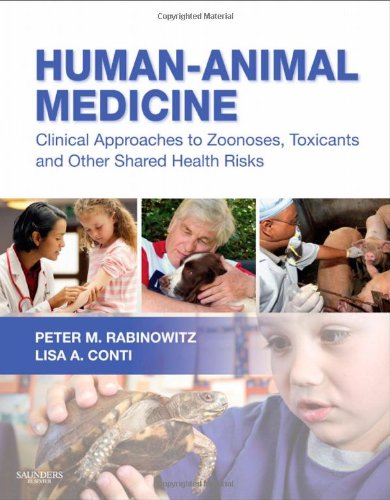
Human-Animal Medicine is an innovative reference exploring the unprecedented convergence of human, animal, and environmental health, triggering global pandemics and requiring new clinical paradigms. The “One Health” approach calls for greater communication and cooperation between human health care providers, public health professionals, and veterinarians to better address vital issues of emerging diseases and environmental change. This incredibly timely book provides, for the first time, practical guidelines for “One Health” collaborations in a wide range of clinical human-animal health issues, including the H1N1 virus, zoonotic diseases, the human-animal bond, animal allergy, bites and stings, and animals as “sentinels” for toxic environmental health hazards.
One Health for Clinicians
The One Health clinical concept recognizes that the health care of humans and animals in a community benefits when there is collaboration and communication between human and animal health professionals. The Center for One Health Research supports the One Health Initiative (OHI), which seeks to promote this collaboration. The OHI has developed a one page brief to inform clinicians about the One Health Initiative and its importance in patient care.
View and download the one page PDF file here.
View Publication
Offline: The origin story—towards a final resolution? – The Lancet
December 31, 2021
“… They took an explicitly one health approach—reconstructing the early part of the outbreak, identifying and mapping products sold at the Huanan seafood market, and testing livestock, wildlife, pets, and zoo animals for evidence of infection. Their report was published on March 30, 2021. …”
View PublicationFunding for Development Assistance At Historic High – Impakter
December 30, 2021
“ … The objectives, as expected, are to support all IDA countries in the roll-out of Covid-19 vaccinations, including strengthening health care systems and pandemic preparedness. This will build on the strong achievements of the previous financing package, IDA19, which saw nearly 70 countries benefiting from IDA financing for vaccines, health professionals’ training, and hospital equipment.
But what is new and notable in IDA20 is the inclusion of One Health, with the objective of supporting at least 20 IDA countries with a One Health approach “to address the nexus between human and animal health”. …”
View PublicationOne Health for Everyone!
December 27, 2021
This article was exclusively written for The European Sting by Ms. Rajvi Chaudhary, a fresh graduate from Medical College Baroda and SSG Hospital, India and Ms. Vidhi Parikh, an intern doctor at Parul Institute of Medical Sciences and Research and Parul Sevashram Hospital, India. They are affiliated with the International Federation of Medical Students Associations (IFMSA), cordial partner of The Sting. The opinions expressed in this piece belong strictly to the writer and do not necessarily reflect IFMSA’s view on the topic, nor The European Sting’s one.
View PublicationThe Concept of One Health Turns Global in 2021: How it was Born
December 25, 2021
One Health News
December 25, 2021 https://impakter.com/
The minds and books behind One Health, the guiding principle adopted this year by the G7, G20 and World Health Assembly to reform public health
View Publication
One Health: A crucial approach to preventing and preparing for future pandemics
December 23, 2021

There is only ‘one health’ — the health of all living organisms in a global ecosystem that, when rapidly altered and imbalanced, puts us all at risk for future pandemics. (Canva)
View Publication
One Health Happenings News Notes
December 20, 2021
|

|
|

|
Vaccines can be tweaked for variants: AIIMS chief
December 20, 2021
Read more at:
http://timesofindia.indiatimes.com/articleshow/88379060.cms?utm_source=contentofinterest&utm_medium=text&utm_campaign=cppst
“… “The whole concept of ‘One Health’ becomes very important, w .. “
View PublicationThe FAO One Health Monitoring Tool aids local, national and regional entities to assess progress made and identify gaps.
December 16, 2021
FAO pilots innovative tool to support One Health operationalization in United Republic of Tanzaniac
Format
News and Press Release
The Tanzania One Health Coordination Desk, in collaboration with the Food and Agriculture Organization of the United Nations (FAO), brought together One Health stakeholders in the United Republic of Tanzania to review the One Health Monitoring Tool (OHMT), an innovative tool that will be used to monitor One Health progress and to assess and evaluate outcomes and operational level. The OHMT aims to improve transparency and support accountability relationships as countries prepare to respond to health threats. The information gathered during this two-day workshop will be used to improve the OHMT with a view to its final review and validation.
One Health is an integrated, unifying approach that aims to sustainably balance and optimize the health of people, animals and ecosystems. It recognizes that the health of humans, domestic and wild animals, plants and the wider environment are closely linked and interdependent. Although there is increasing attention to One Health globally, applying One Health principles routinely remains a major challenge for the formulation of public policy, resource mobilization and sustainable implementation. It is therefore important to integrate the One Health approach into medicine, veterinary, environment, wildlife, public health, agriculture and other relevant disciplines to mitigate the burden of health threats and to implement mechanisms to evaluate and improve the operationalization of the One Health approach across sectors.
Until now, countries did not have a specific tool to assess and monitor their progress on One Health or produce accurate data on One Health operationalization at country and regional levels. With the OHMT, all countries, even those without National One Health platforms, will be able to coordinate and cooperate among sectors involved in health management to monitor One Health progress and evaluate One Health outcomes and operational level.
The Tripartite (FAO, the World Organisation for Animal Health [OIE] and the World Health Organization [WHO]) and the United Nations Environment Programme (UNEP) are supporting implementation of the **One Health approach **at all levels to ensure that specialists in multiple sectors and disciplines work together to tackle threats to health and ecosystems, while addressing the collective need for clean water, energy and air and safe and nutritious food, taking action on climate change, and contributing to sustainable development.
During the opening remarks of the One Health Monitoring Tool pilot workshop, the representative of the Prime Minister’s Office, from the Disaster Management Department of the United Republic of Tanzania, Baltazary Leba, declared: “The One Health approach emphasizes the relatedness of human, animal and environmental health and the importance of transdisciplinary efforts in control and prevention of zoonotic diseases.” Representing FAO’s Emergency Centre for Transboundary Animal Diseases (ECTAD), Niwael Mtui-Malamsha affirmed that “the systematic assessment of the One Health operationalization is important to reveal progress made and identify gaps to inform future One Health strategic planning.”
FAO to pilot tool in three other African countries
The One Health Monitoring tool was developed by FAO to support local, national and regional entities to assess progress and identify gaps in One Health operationalization. It is built on existing frameworks such as the World Bank’s operation framework for strengthening human, animal and environment public health systems at their interface, the One Health SMART tool developed by the University of Minnesota and the United States Department of Agriculture, and the One Health Assessment Planning for Performance (OH-APP) framework designed with funding from the** United States Agency for International Development (USAID)** under the Preparedness and Response Project. Experts from relevant stakeholders such as WHO Regional Office for Africa, OIE Africa, Africa Centres for Disease Control and Prevention, the African Union – InterAfrican Bureau for Animal Resources and Regional Economic Communities were also consulted during the OHMT development.
FAO, through ECTAD, in collaboration with the National One Health platforms of member countries, will also organize pilot workshops in Cameroon, Ethiopia and Liberia that will bring together One Health actors to test and review the OHMT. These preliminary country assessments of the OHMT will improve its effectiveness, as they help to gather feedback from relevant sectors and disciplines at all levels of implementation.
View PublicationSACIDS: A decade of experience developing One Health capacity in Africa
December 16, 2021
Gerald Misinzo and Mark Rweyemamu tells us about the decade of work done by the SACIDS Foundation for One Health to protect Sub-Saharan Africa from deadly infectious diseases, including COVID-19
Faced with the conundrum of a high burden of infectious disease yet a low capacity for its risk management, representatives of academic and research institutions in 5 Member States of the Southern African Development Community (SADC) – Democratic Republic of the Congo, Mozambique, South Africa, Tanzania and Zambia, resolved to form, in January 2008, the Southern African Centre for Infectious Disease Surveillance (SACIDS) to address infectious diseases in the endemic settings of Africa. The Founding institutions peer-elected Sokoine University of Agriculture in Tanzania to host the Secretariat and Headquarters of SACIDS. …
View Publication
Quick Links
-
Please see MONOGRAPH in Veterinaria Italiana
“One Health – One Medicine”: linking human, animal and environmental health
Read More -
History of the One Health Initiative team and website (April 2006 through September 2015) and the One Health Initiative website since October 1, 2008 … revised to June 2020 and again to date February 2021
Read More -
Vaccines for zoonoses: a One Health paradigm
SciTech Europa Quarterly (March 2018) – Issue 26
Read More -
Pan European Networks SciTech Europa Quarterly
SciTech Europa Vaccines for zoonoses: a one Health paradigm – Pages 227-229 (Read PDF) “One of the One Health Initiative team’s co-founders and leaders is an internationally-recognized eminent physician…
Read More Read PDF